
I Started a Small Online Business With Zero Budget — Here’s What Actually Worked
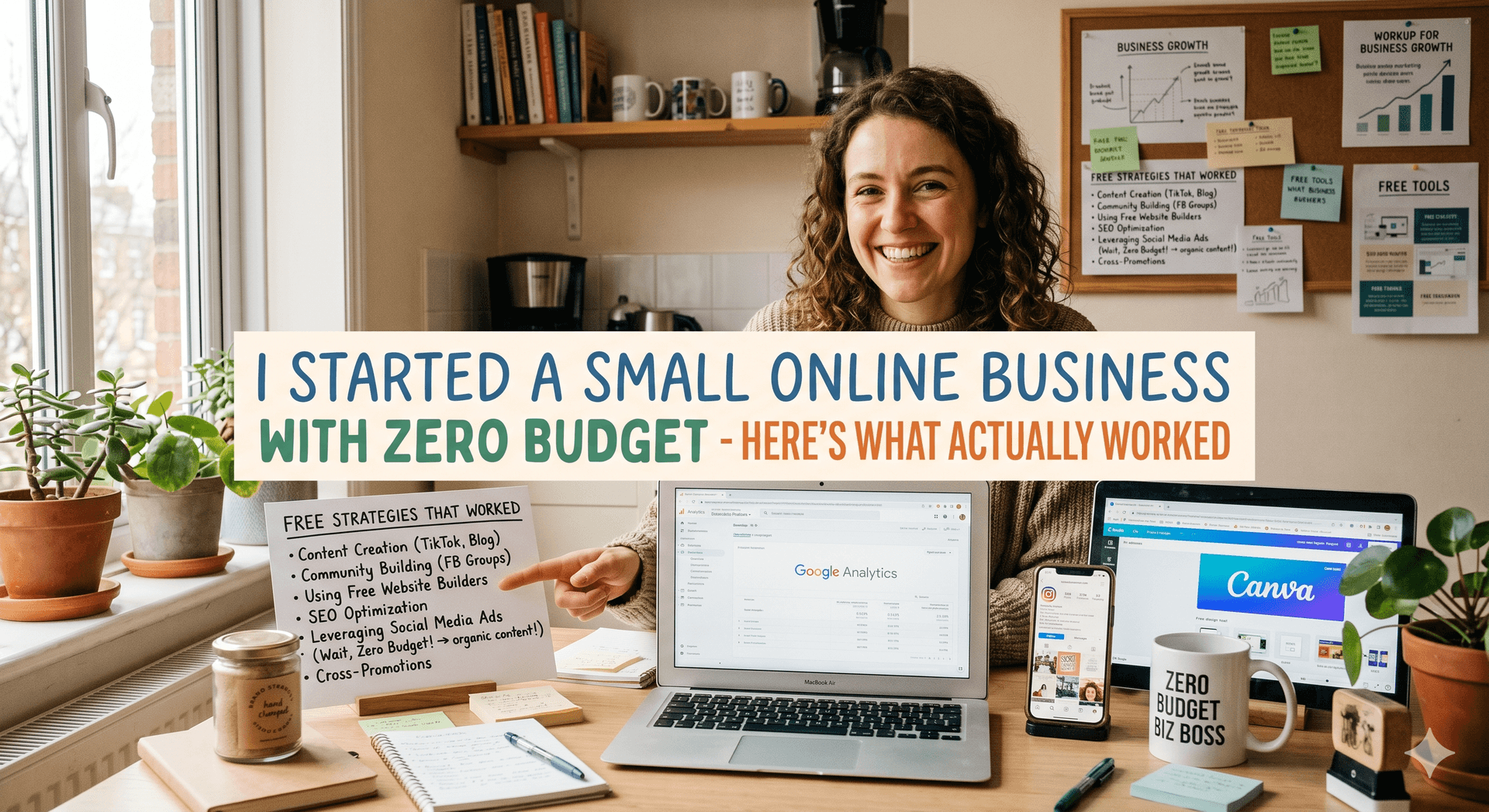
I started a small online business with zero budget and tested what really works. Learn practical strategies to build, grow, and earn without spending money upfront.
Introduction
Starting a business sounds exciting—until you realize most advice assumes you already have money to spend.
I didn’t.
No ads, no premium tools, no fancy setup. Just a laptop, internet, and a goal to make something work. So instead of waiting for the “perfect time,” I started with what I had and figured things out along the way.
Some things failed. A few worked surprisingly well. Here’s what actually made a difference.
1. Starting Before I Felt Ready
I spent days overthinking my idea—until I realized I was just delaying the actual work.
So I picked a simple service I could offer and launched it immediately. No logo, no website, just a clear offer. That first step mattered more than any plan.
2. Offering Services Instead of Products First
At the beginning, I tried selling digital products. No sales.
Then I switched to offering services—something people already needed. This brought faster results because I wasn’t waiting for traffic. I was reaching out directly.
3. Using Free Platforms to Get Clients
I didn’t build a website right away.
Instead, I used free platforms and social media to showcase what I could do. I posted consistently, shared small wins, and made my offer clear. Slowly, people started reaching out.
4. Keeping My Offer Simple
At first, I tried to offer too many things.
It confused people—and honestly, it confused me too. When I simplified my offer into one clear service, it became easier to explain and easier to sell.
5. Focusing on Solving Real Problems
I stopped trying to be “impressive” and focused on being useful.
Instead of saying what I do, I focused on what problem I solve. That shift made my messaging clearer and helped potential clients understand my value quickly.
6. Learning Basic Sales Communication
I used to feel awkward talking about money or pitching services.
But I learned that selling is just clear communication. I started asking questions, understanding client needs, and offering solutions instead of pushing sales.
7. Building Proof Early
People don’t trust promises—they trust results.
So I focused on getting small wins and turning them into proof. Even one successful project became something I could show to others.
8. Avoiding Unnecessary Tools
At one point, I almost paid for tools I didn’t really need.
Instead, I stuck with free versions and simple systems. It forced me to focus on execution instead of setup.
9. Staying Consistent (Even When It Was Slow)
There were days when nothing happened.
No messages, no sales, no growth. But I kept showing up, posting, improving my offer, and learning from feedback. Over time, those small efforts started to compound.
10. Realizing That Growth Takes Time
I used to expect quick results.
But building something real takes time. Once I accepted that, I stopped rushing and started focusing on steady progress instead.
Final Thoughts
Starting a business without money is not easy—but it’s possible.
You don’t need perfect tools, a big budget, or a complicated strategy. You just need to start, stay consistent, and focus on what actually works.
Looking back, the biggest lesson wasn’t about business—it was about execution.
Because at the end of the day, ideas don’t build businesses. Action does.
More in this Category
Mga Paraan para Mapalago ang Small Business gamit ang Digital Tools ngayong 2026

7 Patok na Negosyo sa Maliit na Puhunan para sa mga Estudyante ngayong 2026
