Free Things You Can Do Online to Learn a New Skill in 2026
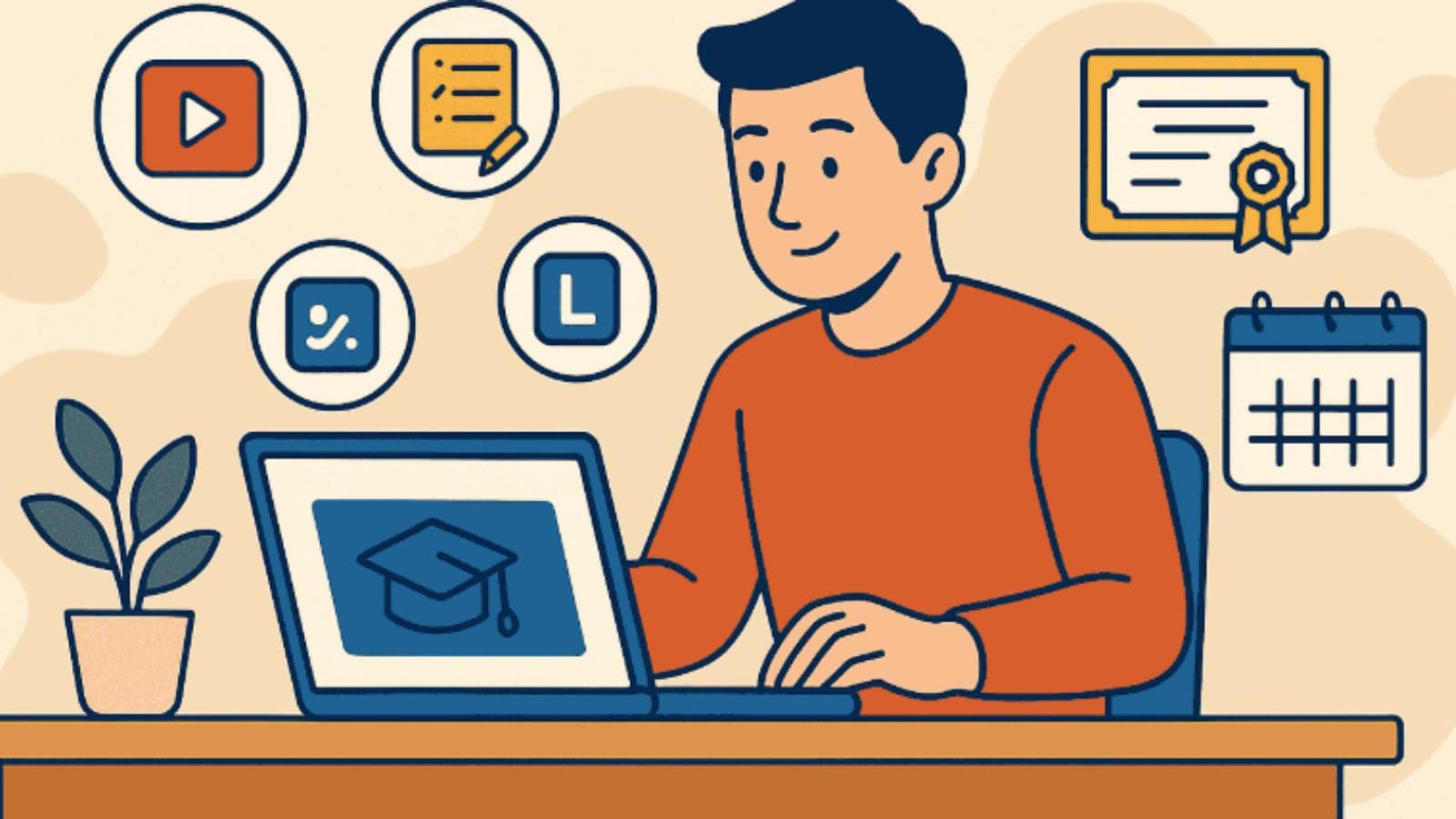
There has never been a better time in human history to learn something new for free. The internet has quietly dismantled the idea that quality education requires expensive tuition, a physical classroom, or even a structured curriculum. Today, anyone with a device and a reliable connection has access to the same foundational knowledge that used to be locked behind university walls and professional training programs.
But here is the problem most people run into: the options are overwhelming. Search for how to learn anything and you are immediately flooded with course platforms, YouTube channels, podcasts, subreddits, newsletters, Discord servers, and tools that all promise to teach you something. Most people open three tabs, feel paralyzed, and close all of them.
This guide cuts through that noise. It is not a list of every free resource on the internet. It is a focused, practical breakdown of the best free methods and platforms available in 2026, what each one is actually good for, and how to use them in a way that produces real, lasting skill development rather than passive consumption that goes nowhere.
Why Free Online Learning Works Better Now Than It Ever Has
A few years ago, free online learning had a real quality problem. The best content was scattered, hard to find, and often incomplete. The good courses cost money. The free ones were frequently outdated, poorly structured, or designed as loss leaders to upsell you into a paid program.
That has changed significantly. Several forces converged to make free online education genuinely excellent in 2026.
Major universities began releasing full course content publicly, not just as marketing, but as complete curricula with lecture videos, reading materials, and assignments. Large tech companies started funding free certification programs to build talent pipelines in fields where they struggle to hire. Content creators on platforms like YouTube matured from hobbyist explainers into professional educators producing structured, high-quality courses at no cost. And artificial intelligence tools have made personalized learning support available to anyone, which was previously only possible with a private tutor.
The result is that the gap between free and paid education has narrowed dramatically. The main things money still buys you in education are credentials that employers recognize, peer accountability structures, and direct access to instructors. The knowledge itself is largely free if you know where to look.
Start with YouTube: The Most Underestimated Learning Platform on Earth
Most people think of YouTube as entertainment. The reality is that it is the largest free educational resource ever created, and most people are using a fraction of its potential.
Whatever skill you want to learn, there is almost certainly a dedicated YouTube channel that teaches it comprehensively, for free, in a structured way. The key is knowing how to use the platform as a curriculum rather than a rabbit hole.
How to Use YouTube as a Structured Learning Tool
The mistake most people make is searching for a topic, clicking the first video that comes up, watching it, and then falling into the recommendation algorithm. Thirty minutes later they have watched three tangentially related videos and learned almost nothing that sticks.
The better approach is to find a single creator who teaches your target skill systematically and watch their content in order. Most serious educational YouTube channels organize their videos into playlists that function as free courses. Find the beginner playlist, start at video one, and work through it in sequence before moving on.
Search specifically for terms like beginner course, full tutorial, complete guide, or series when looking for educational content. These terms surface structured, multi-part content rather than one-off explainer videos.
What YouTube Teaches Best
YouTube excels at practical, visual skills where seeing someone do the thing is more valuable than reading about it. Coding, graphic design, video editing, music production, cooking techniques, language learning, photography, fitness and movement, and most trades and crafts are all extremely well represented. For these kinds of skills, YouTube is often better than paid courses simply because the volume and variety of free content is so large.
Free Course Platforms Worth Your Time in 2026
Several dedicated online learning platforms offer high-quality courses at no cost. Not all of them are worth your time in the same way, so it helps to understand what each one does well.
Coursera's Free Audit Option
Coursera hosts courses from universities including Yale, Johns Hopkins, Stanford, and Google. The majority of these courses can be audited for free, meaning you get full access to the video lectures, readings, and most assignments without paying anything. The only things locked behind a paywall are the graded assignments and the certificate of completion.
If you are learning for personal growth or skill development rather than a credential, auditing is often all you need. The content is exactly the same as the paid version. Coursera is particularly strong for data science, business, technology, and health-related subjects.
edX and Its University Partnerships
edX operates on a similar model to Coursera and is also home to courses from MIT, Harvard, Berkeley, and other major institutions. Like Coursera, most content can be accessed for free in audit mode. edX tends to be slightly more academic in tone, which makes it an excellent choice for people who want depth and rigor rather than quick practical skills.
Khan Academy for Foundational Skills
Khan Academy is entirely free with no paid tier whatsoever, and it is one of the most useful resources available for anyone who needs to build or reinforce foundational knowledge. Mathematics, science, economics, history, grammar, and computing are all covered comprehensively from basic to advanced levels.
If you want to learn data analysis but your math is rusty, Khan Academy will fill that gap. If you want to understand how the economy works before diving into personal finance, Khan Academy's economics courses are among the clearest explanations available anywhere. Do not overlook it because it has the reputation of being for students. The content serves adults just as effectively.
freeCodeCamp for Technology Skills
If you want to learn coding, web development, data science, or anything related to software and technology, freeCodeCamp is one of the best free resources in existence. The platform offers structured, project-based curricula that take you from absolute beginner to a level where you can build real things and show real work. Every certification on freeCodeCamp is completely free and earned through completing actual projects rather than just watching videos.
The curriculum is regularly updated to reflect current industry standards, and the freeCodeCamp YouTube channel complements the platform with hundreds of hours of additional free instruction.
Google's Free Certificate Programs
Google offers a range of free and low-cost certificate programs through its Grow with Google initiative and through Coursera. In 2026 the programs covering digital marketing, data analytics, project management, UX design, IT support, and cybersecurity remain among the most practically oriented free credentials available online. These certificates are specifically designed to be recognized by employers as evidence of job-ready skills, which gives them practical value beyond just the knowledge itself.
How to Use AI Tools as a Free Personal Tutor
This is the development that has most dramatically changed free online learning in the past two years, and most learners are not taking full advantage of it.
AI assistants are available for free at a level that functions as a genuinely useful personal tutor. You can ask questions at any level of complexity and get clear explanations. You can ask for the same concept to be explained in a different way if the first explanation did not land. You can ask for practice exercises, worked examples, feedback on your writing, explanations of your mistakes, and suggestions for what to learn next.
Using AI to Accelerate Any Learning Path
The most effective way to use AI for learning is not to have it do the work for you, but to use it as an on-demand explainer and practice partner. When you hit a concept you do not understand while working through a course or textbook, ask the AI to explain it differently. When you complete a piece of writing or a project, ask for honest feedback on specific aspects. When you want to test your understanding, ask the AI to quiz you on what you have just learned.
This kind of interactive, responsive support used to require a human tutor who charged by the hour. It is now available for free at any time of day, which removes one of the biggest barriers to self-directed learning: the long stretches of confusion that occur when you get stuck and have no one to ask.
Using AI to Build a Custom Learning Plan
If you are not sure where to start with a new skill, AI can help you build a structured learning plan tailored to your specific goals, current knowledge level, and available time. Describe what you want to learn, what you already know, and how much time you can dedicate each week. Ask for a structured plan with specific free resources for each stage. The result is a personalized curriculum that would previously have required either expensive coaching or hours of research to construct yourself.
Free Communities Where Learning Accelerates
One of the most underused free learning resources available is other people who are learning the same things you are. Community-based learning is consistently shown to produce better outcomes than isolated self-study, because it creates accountability, provides diverse perspectives, and exposes you to problems and solutions you would not encounter on your own.
Reddit's Learning Communities
Reddit has active communities dedicated to nearly every skill imaginable. These communities are not just places to ask questions. They are places to observe how more advanced practitioners think, see the work of people at every stage of development, get feedback on your own work, and stay current with developments in your field. The quality of advice varies, but the signal-to-noise ratio in well-moderated subreddits dedicated to specific skills is genuinely high.
Discord Servers for Skill-Based Learning
Discord has become one of the most active platforms for learning communities in 2026. Almost every major skill area, from programming languages to creative writing to financial literacy to language learning, has dedicated Discord servers with thousands of active members at various skill levels. Many of these servers have organized channels for beginners, resources channels with curated free materials, and regular events like group challenges, critique sessions, and live Q and A with more experienced members.
Finding the right server for your skill typically takes a quick search on sites that index Discord communities. Once you find one with an active, constructive culture, the value of being in that community often exceeds what you can get from any single course or resource.
GitHub for Technical Skills
For anyone learning anything related to software, data, or technical disciplines, GitHub is both a learning resource and a community simultaneously. Reading other people's code, contributing to open source projects, and sharing your own work publicly creates a feedback loop that accelerates technical skill development faster than isolated study. Many experienced developers and data scientists publish their entire learning journey on GitHub, including notes, projects, and resources, which beginners can follow and learn from directly.
Podcasts and Audio Learning for Skills You Can Build Passively
Not all learning requires sitting at a desk with full attention. Podcasts have matured significantly as a learning medium and now cover professional and technical subjects at a depth that was previously only available in books and courses.
The key is being strategic about which podcasts you consume and treating them as supplementary learning rather than primary instruction. Podcasts are excellent for building conceptual understanding, staying current with a field, absorbing the thinking of practitioners, and maintaining motivation and perspective over a long learning journey. They are less suited for technical skill building that requires practice and feedback.
If you are learning a language, podcasts in that language are among the most effective tools available for developing listening comprehension and natural fluency. If you are learning about business, investing, design, psychology, or any field driven by ideas and thinking, podcasts from practitioners and experts in those fields are genuinely educational and completely free.
Free Books, Libraries, and Reading Resources
In the rush to embrace video and interactive platforms, the value of reading for skill development is frequently underestimated. Books remain one of the most efficient ways to build deep knowledge in any subject, and in 2026 a significant amount of excellent reading material is available for free.
Project Gutenberg and Open Library
Project Gutenberg provides free access to tens of thousands of books whose copyright has expired, including foundational texts in philosophy, science, economics, and literature. Open Library, run by the Internet Archive, allows you to borrow digital versions of millions of books for free with a library card, and in many cases without one.
Your Local Public Library's Digital Collection
This is one of the most overlooked free resources available to most people. Public libraries now offer digital borrowing of ebooks and audiobooks through platforms like Libby and Hoopla, which are free with a library card. The collections include recent bestsellers, professional development books, textbooks, and educational audiobooks. If you are not using your library's digital lending service, you are leaving a substantial free resource untouched.
Free Textbooks and Academic Papers
Many universities publish course reading materials openly. OpenStax provides free, peer-reviewed textbooks covering subjects from biology to statistics to economics. Google Scholar provides access to a large volume of academic research, and many authors post free versions of their papers on their personal or institutional websites. For anyone who wants to go deep into a subject, these resources provide the same material that students pay thousands of dollars to access.
How to Actually Make Free Learning Stick
Having access to free resources and actually developing a skill are two very different things. The graveyard of online learning is full of people who bookmarked courses, saved YouTube playlists, and joined communities but never built real competency. The problem is almost never the quality of the resources. It is the approach.
Pick One Skill and One Primary Resource
The biggest mistake beginners make is trying to learn from too many sources at once. More resources does not mean faster learning. It usually means shallower, more fragmented learning that never coheres into actual ability. Pick one skill that matters to you. Find the best free resource for that skill based on your learning style. Start there and commit to finishing before adding anything else.
Learn by Doing, Not Just Watching or Reading
Passive consumption is the enemy of skill development. Watching a tutorial teaches you how someone else does something. Doing the thing yourself, even badly at first, is what builds actual competency. Every learning session should include an active component where you produce something, practice something, or apply what you have just learned. Without this, the knowledge tends to evaporate within days.
Build a Simple Accountability Structure
Free learning lacks the external accountability that comes with paid courses, university enrollment, or structured programs. You have to create your own. This can be as simple as telling someone what you are learning and checking in with them weekly. It can be posting your progress publicly in a community. It can be setting a specific goal with a deadline and tracking your progress toward it. The structure does not need to be elaborate. It needs to exist.
Measure Progress with Real Output
The most reliable way to know whether you are actually learning is to regularly produce something that demonstrates your current level. Write an article about what you have learned. Build a small project. Teach someone else a concept. Record yourself performing a skill. These outputs serve two purposes: they reveal gaps in your understanding that passive consumption would never surface, and they create a record of progress that sustains motivation over the long journey of genuine skill development.
The Best Free Skills to Learn Online in 2026
While any skill can be learned online, some have a particularly rich ecosystem of free resources and offer strong practical returns on the time invested.
Data literacy and basic data analysis are in high demand across virtually every industry, and the free resources for learning spreadsheet skills, basic statistics, and tools like Python for data science are exceptional. freeCodeCamp, Khan Academy, and YouTube collectively cover this skill from beginner to professional level at no cost.
Digital marketing, including content creation, search engine optimization, social media strategy, and email marketing, can be learned comprehensively through Google's free programs, HubSpot's free certification courses, and an enormous volume of high-quality YouTube content. These skills have direct practical application for anyone running a business, working in marketing, or building an audience online.
Graphic design and visual communication have outstanding free learning resources through YouTube channels dedicated to tools like Canva, Adobe Express, and Figma, all of which offer free tiers sufficient for learning and early practice.
Writing and communication, which underpin success in almost every professional field, can be developed through a combination of structured courses on platforms like Coursera, community feedback in writing-focused Reddit communities and Discord servers, and the timeless practice of reading widely and writing consistently.
A second language remains one of the highest-value skills a person can develop, and the combination of free apps, YouTube immersion content, language exchange communities, and AI conversation practice makes meaningful language acquisition more accessible than it has ever been.
Final Thoughts
The barrier to learning a new skill in 2026 is not access to information. That problem was solved years ago. The barrier is almost always clarity and consistency: knowing specifically what you want to learn, choosing a focused path rather than dabbling across dozens of resources, and showing up regularly enough that accumulated effort actually transforms into ability.
The resources covered in this guide are enough to take you from knowing nothing about almost any skill to reaching a level of genuine competency. All of it is free. None of it requires a subscription, a degree program, or a large investment of money.
What it does require is the willingness to start, the discipline to continue, and the patience to trust that small daily progress adds up to something real over time. That part has always been true about learning, and no amount of free resources changes it. But with everything now available to you at no cost, the only honest obstacle left is the decision to begin.
More in this Category
U.S. Tech Industry 2026 Update: AI Job Market Shift, Layoff Recovery, and Silicon Valley Growth Trends

The Day My Dad Argued with a Lightbulb: Finding the Human Side of Smart Homes

I Tested 10 Lightweight Tech Tools on a Low-End Laptop — Here’s What Actually Worked