
Crisis at the Horn: Operation "Project Freedom" Ignites the Strait of Hormuz
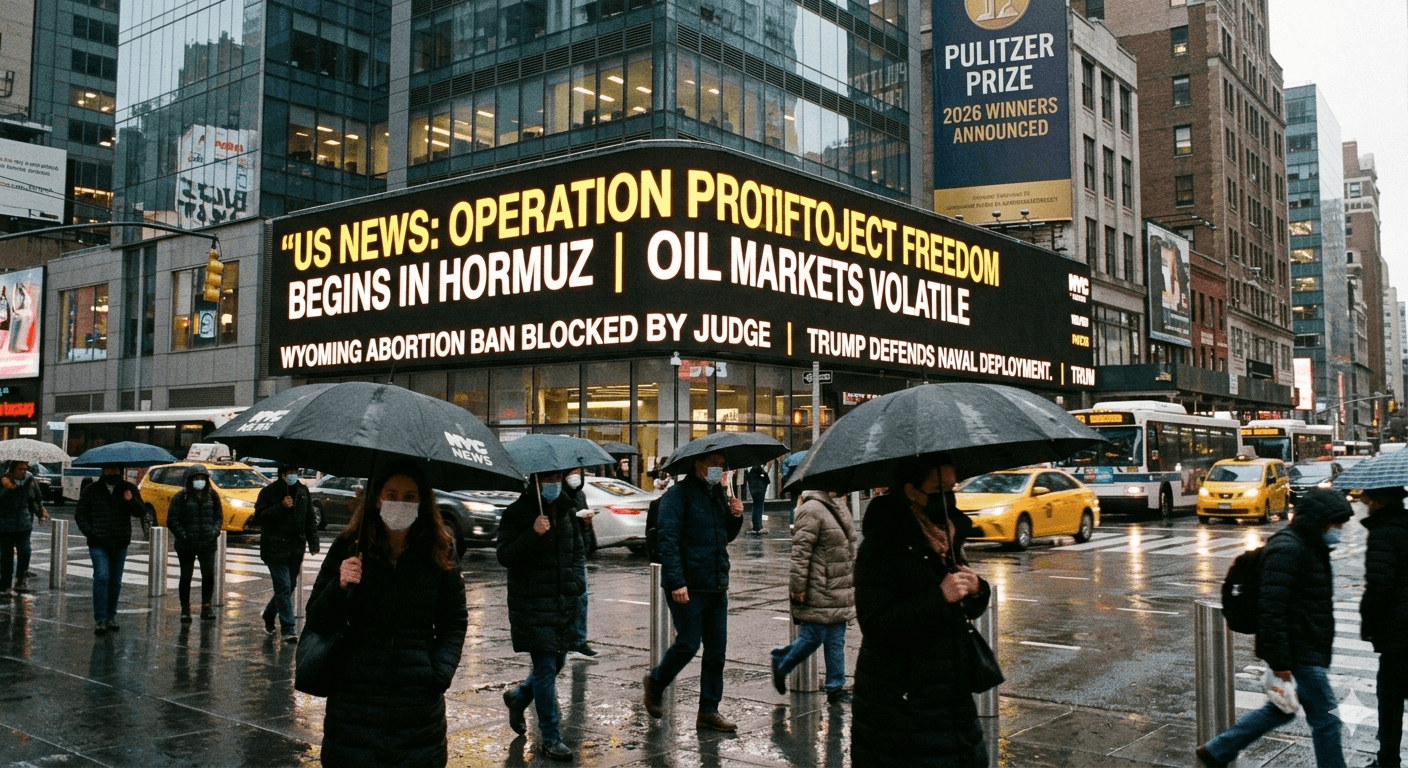
The world is holding its breath today as Operation "Project Freedom" officially moves from a strategic plan to a high-stakes maritime confrontation. Launched on Monday morning under direct orders from U.S. President Donald Trump, the mission aims to break an Iranian blockade and reopen the Strait of Hormuz, a critical artery for 20% of the world's oil and liquefied natural gas.
What began as a "humanitarian gesture" to rescue nearly 2,000 stranded commercial vessels has rapidly escalated into active combat.
1. Combat in the Strait: Missiles and Drones Fly
Hours after the operation commenced, U.S. Central Command (CENTCOM) confirmed the first major exchange of fire.
- Neutralizing Threats: U.S. forces, including guided-missile destroyers and over 100 aircraft, destroyed six Iranian small boats and intercepted multiple cruise missiles and drones.
- Conflicting Reports: While Iran claims to have struck a U.S. navy destroyer with two missiles, Washington has flatly denied any hits on military vessels.
- Tanker Targeted: An oil tanker operated by the Abu Dhabi National Oil Company, the MV Barakah, reportedly came under an Iranian drone attack off the coast of Oman.
2. The Humanitarian Mission vs. Military Reality
President Trump has framed the operation as an effort to free "neutral and innocent" seafarers—estimated at 20,000 crew members—who are running low on food, water, and essential supplies.
- Flexible Protection: Instead of full convoys, the Navy is using "area security," employing layered air defense and unmanned systems to protect vessels as they transit narrow lanes.
- Initial Success: CENTCOM reported that two American-flagged merchant ships successfully transited the corridor under the new protective umbrella.
3. Iran’s Fierce Response
Tehran has rejected the operation, labeling it a violation of the existing ceasefire.
- Sovereignty Claims: Iranian officials maintain they control the strategic waterway and insist that neutral vessels may only pass if they pay a transit toll.
- Vowed Retaliation: Lawmakers in Tehran warned that any "interference" by U.S. naval assets would be met with force, further heightening the risk of a full-scale regional war.
Why It Matters: The Global Impact
The stakes of "Project Freedom" extend far beyond the Middle East. With commercial shipping traffic through the Strait having collapsed by over 90% since the blockade began, global energy markets are in a state of high volatility.
"The IRGC has launched multiple cruise missiles, drones and small boats at ships we are protecting. We have defeated each and every one of those threats through the clinical application of defensive munitions." — U.S. Admiral Brad Cooper, Head of CENTCOM
As 15,000 U.S. service members remain on high alert, the world waits to see if this mission will restore freedom of navigation or serve as the spark for a wider global conflict.
More in this Category
U.S. Energy Prices Stabilize in 2026 as Oil Output Rises and Renewable Expansion Accelerates

U.S. Job Market Remains Strong in 2026 as Hiring Shifts Toward AI, Healthcare, and Skilled Trades
U.S. Housing Market Shows Early Signs of Stabilization as Mortgage Rates Ease and Buyer Demand Returns in 2026
Indiana Pacers’ Fast-Paced Offense Shocks Eastern Conference as 2026 NBA Playoffs Heat Up