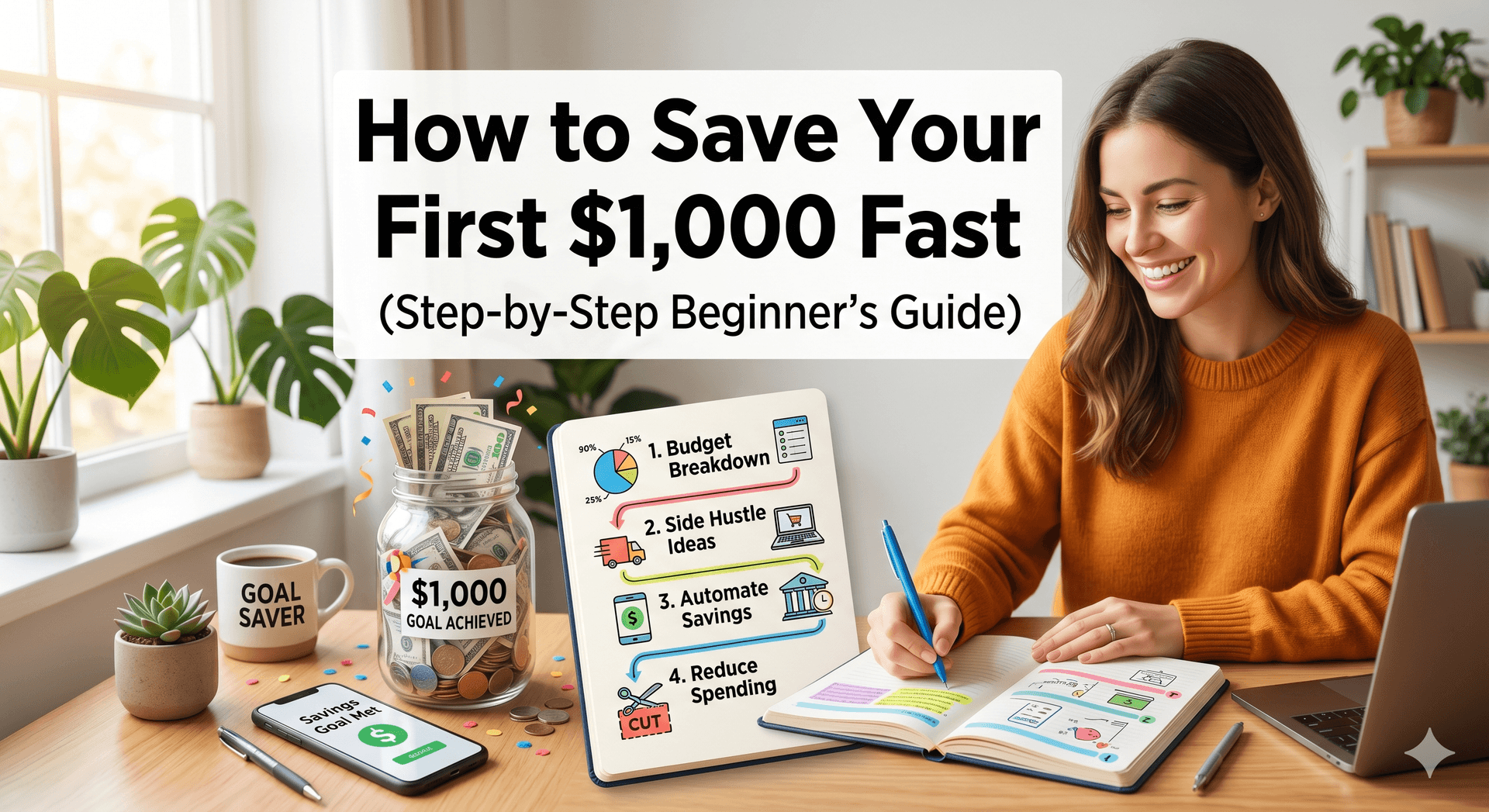
How to Save Your First $1,000 Fast (Step-by-Step Beginner’s Guide)
Introduction
Saving your first $1,000 can feel impossible—especially if you’re living paycheck to paycheck. But the truth is, you don’t need a high income to start saving. What you need is a clear plan and consistent action.
This guide breaks down exactly how to build your first $1,000 step by step. No complicated strategies, no extreme budgeting—just practical methods that actually work.
Step 1: Know Where Your Money Goes
What to Do
Track every expense for at least 3 to 7 days. List everything—food, transportation, subscriptions, and small purchases.
Why It Works
You can’t fix what you don’t see. Tracking reveals unnecessary spending and helps you understand your financial habits.
Step 2: Cut One Unnecessary Expense
What to Do
Identify one expense you can reduce or remove. This could be daily snacks, unused subscriptions, or impulse purchases.
Why It Works
You don’t need to cut everything. Removing just one consistent expense can free up money you can save immediately.
Step 3: Set a Clear Savings Target
What to Do
Break your $1,000 goal into smaller parts. For example, save $50 to $100 per week depending on your income.
Why It Works
Smaller goals feel achievable and keep you motivated. It turns a big goal into manageable steps.
Step 4: Use the “Pay Yourself First” Method
What to Do
As soon as you receive money, set aside a portion for savings before spending anything.
Why It Works
Saving first ensures that your goal is prioritized instead of relying on leftover money.
Step 5: Increase Your Income (Even Slightly)
What to Do
Look for simple ways to earn extra money. This could be freelancing, selling unused items, or offering small services.
Why It Works
Cutting expenses has limits, but increasing income speeds up your progress significantly.
Step 6: Keep Your Savings Separate
What to Do
Store your savings in a separate account or digital wallet that you don’t use daily.
Why It Works
This reduces the temptation to spend and helps you stay committed to your goal.
Step 7: Stay Consistent and Track Progress
What to Do
Check your savings weekly and update your progress. Celebrate small milestones along the way.
Why It Works
Tracking progress keeps you motivated and reinforces the habit of saving.
Conclusion
Saving your first $1,000 is not about discipline alone—it’s about having a system that works for you.
By following these simple steps, you can take control of your finances, reduce stress, and build a strong financial foundation. Once you reach your first $1,000, you’ll realize that saving is not as difficult as it seems—it just requires the right approach and consistency.
More in this Category


Mastering Personal Finance: A Practical Guide to Building Long Term Wealth