Prague After Midnight: Cobblestone Streets, Lantern Glow and Gothic Magic
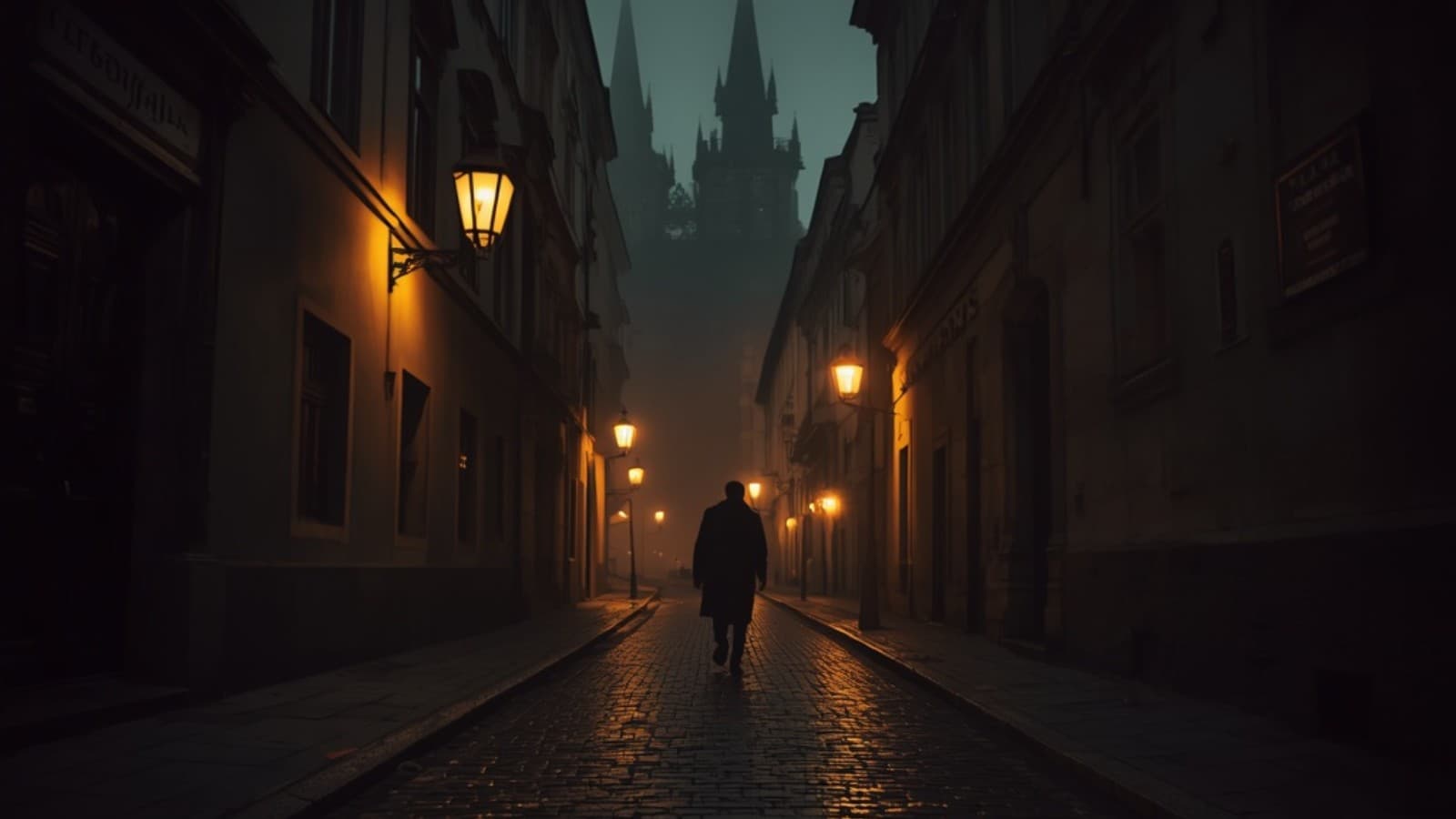
Discover Prague after dark — gas-lit cobblestone streets, gothic spires disappearing into mist, and a city that reveals its true soul when the crowds go to sleep. Your complete guide to experiencing Prague's most magical hours.
Prague After Midnight: Cobblestone Streets, Lantern Glow and Gothic Magic
There is a version of Prague that most visitors never see. It exists in the hours after the last tour group has returned to their hotel, after the riverside restaurants have dimmed their lights, after the Charles Bridge empties of the vendors and portrait artists who occupy it through the daylight hours. In those hours — from around midnight until the first grey light of a central European dawn — the city becomes something else entirely.
The cobblestones glisten. The gas lanterns throw amber pools of light across streets so narrow that two people walking side by side will brush both walls with their shoulders. The gothic spires of the Tyn Church and St. Vitus Cathedral rise into low cloud or clear star-filled sky depending on the night, their stone faces unchanged since the fourteenth century. The sound of footsteps echoes through empty squares that held thousands of people twelve hours earlier. And the overwhelming feeling, moving through this city at this hour, is that you are inside something ancient, deliberate, and completely alive.
Prague after midnight is not a travel tip or a photography hack. It is the city as it actually is, stripped of the noise and volume that its daytime popularity requires. This guide exists to help you find it, understand it, and experience it fully.
Why Prague Is Unlike Any Other European City After Dark
Prague survived the twentieth century with a completeness that almost no other major European city can claim. While Dresden, Warsaw, Berlin, Rotterdam, and large sections of London and Coventry were destroyed by bombing and subsequently rebuilt, Prague emerged from both World War Two and the Cold War era with its medieval and baroque urban fabric almost entirely intact. The result is a city centre that functions simultaneously as a living European capital and as the most complete medieval urban landscape anywhere on the continent.
This architectural completeness is what makes Prague after dark so different from any other city night experience in Europe. When you walk through the Old Town at midnight, the buildings surrounding you are genuinely medieval and baroque structures, not postwar reconstructions built to historical appearance. The stone underfoot has been worn smooth by eight centuries of foot traffic. The proportions of the streets and squares were designed for a pre-industrial city, which means they are human in scale in a way that most modern urban environments are not.
The Architecture That Creates the Gothic Atmosphere
Prague's Old Town and Mala Strana districts contain one of the most concentrated collections of gothic, romanesque, and baroque architecture in the world. The city developed in successive historical layers — romanesque foundations beneath gothic churches, gothic structures with baroque facades added in the seventeenth and eighteenth centuries, and art nouveau decorations applied to medieval street-level shopfronts — and these layers are visible simultaneously in almost every block.
The gothic elements are the ones that define the night atmosphere most completely. Gothic architecture — characterised by pointed arches, ribbed vaulting, flying buttresses, and a general vertical emphasis that draws the eye upward — was designed to create a specific psychological response: the sense of being in the presence of something larger and older than ordinary human experience. At night, with the stone lit from below by lanterns and from above by whatever light the sky provides, this effect operates at full intensity. The buildings do not look like historical monuments. They look like what they are — structures built to contain and project a particular kind of spiritual seriousness — and the darkness makes that intention impossible to ignore.
The Lantern Light That Defines the Visual Mood
Prague's Old Town is lit at night by a combination of modern street lighting and an extensive network of traditional lanterns, many of which retain their historic iron fittings even where the light source inside has been updated. The colour temperature of this lighting is warm — amber and gold rather than the blue-white of modern LED street lighting — and it creates a visual quality that reads, in photographs and in person, as almost cinematically beautiful.
The warm lantern light does several things to the stone cityscape simultaneously. It deepens the shadows between buildings, making the streets appear narrower and more enclosed than they are in daylight. It picks out the texture of the stone facades — the carved details of gothic doorways, the worn edges of cobblestones, the condensation on ironwork railings — with a clarity that flat daylight does not achieve. And it creates reflections in the wet cobblestones after rain that double every light source into a second luminous layer at ground level.
This combination of warm light, wet stone, and gothic stone architecture is what produces the particular visual quality that defines Prague at night and that has made the city one of the most photographed night landscapes in the world.
The Streets and Squares of Prague After Dark
Prague's Old Town is compact enough to explore entirely on foot, and its layout — a network of medieval lanes connecting larger squares and market spaces — is designed in a way that rewards walking without a fixed destination. At night, with fewer people and no commercial noise competing for attention, the spatial sequence of this urban landscape becomes fully legible.
The Old Town Square at Midnight
The Old Town Square is Prague's primary public space and one of the most architecturally rich squares in Europe. During the day it is crowded to a degree that makes it difficult to appreciate — tour groups, market stalls, horse-drawn carriages, and the constant movement of visitors from the nearby metro stations and hotels fill it from morning until evening.
At midnight it is a different place. The astronomical clock on the Old Town Hall tower stands silent between its hourly performances, its painted face illuminated from below. The Tyn Church looms at the square's eastern end, its twin gothic towers rising to pointed spires that disappear into mist or dark sky depending on the conditions. The baroque and gothic facades surrounding the square on all sides are lit from ground level, their architectural details rendered in warm shadow and light that makes each building appear distinct and individually considered.
Standing at the centre of the Old Town Square at midnight and turning slowly through 360 degrees is one of the most genuinely impressive architectural experiences available in any European city. The density of exceptional buildings around a single public space, visible simultaneously, is simply without equal outside of perhaps Venice and Siena.
The Charles Bridge at 2am
The Charles Bridge is Prague's most famous landmark and, during daylight hours, its most crowded. The bridge stretches 516 metres across the Vltava River and is lined on both sides by thirty baroque statues of saints and biblical figures, their stone faces worn by centuries of weather and the touch of passing hands. On a busy summer afternoon, crossing the bridge can feel more like navigating a pedestrian rush hour than experiencing a historic monument.
At 2am in the shoulder season — March, April, October, or November — the bridge is empty. Or close enough to empty that you can stand at its centre, midway between the two banks, and hear the river moving below and nothing else. The castle district rises on the far bank, the floodlit cathedral visible above the cluster of baroque rooftops. The statues stand in their rows, larger and more present at night than in daylight, the black patina of their stone appearing almost liquid in the lantern light from the bridge's lamp posts.
Crossing the Charles Bridge alone at night is one of those experiences that is impossible to adequately describe in advance and impossible to adequately forget afterward. It belongs to a small category of travel experiences that are not improved by company, by commentary, or by any context beyond simply being there.
The Lesser Town and Mala Strana
On the western bank of the Vltava, directly beneath Prague Castle, the district of Mala Strana — the Lesser Town — is perhaps the most atmospherically perfect neighbourhood in the city for night walking. It developed as a settlement beneath the castle in the thirteenth century and was rebuilt in the baroque style following a fire in 1541, which gives it a visual consistency that the more layered and complex Old Town lacks.
The streets of Mala Strana are narrow, steep in places, and lined with ochre and terracotta baroque facades that glow warmly under the district's lantern lighting. The Nerudova Street, which climbs steeply from Malostranske Namesti toward the castle steps, passes a continuous sequence of baroque palaces and townhouses bearing their traditional house signs — a golden key, a red eagle, two suns — in the absence of street numbers. At midnight, the street is almost empty, the sound of your footsteps on the stone climbing toward the castle visible in fragments above the roofline.
The small gardens and courtyards of Mala Strana are accessible in daylight but reveal themselves differently at night — pools of shadow between lit buildings, the sound of a fountain in a courtyard that you cannot quite locate, the occasional lit window in a building whose interior you cannot see. These are the textures of old urban fabric experienced at its most intimate.
The Jewish Quarter and the Older City
The Josefov district — Prague's former Jewish Quarter, situated between the Old Town Square and the river — contains the oldest surviving Jewish cemetery in Europe and several medieval synagogues that have stood on this ground since the twelfth and thirteenth centuries. The neighbourhood was largely rebuilt in the late nineteenth century in the Parisian Haussmann style, giving it a slightly different architectural character from the medieval lanes of the Old Town proper.
At night, the contrast between the grand fin-de-siecle apartment facades and the ancient synagogues tucked between them is particularly striking. The Old Jewish Cemetery, not accessible at night, sits behind stone walls in the middle of the district — its presence felt rather than seen, a density of layered graves beneath a canopy of ancient elder trees. The surrounding streets carry the weight of this history quietly, in the way that very old places carry their histories — not insistently, but undeniably.
The Dark Academia Atmosphere of Prague's Night City
Prague has become one of the defining destinations of what is broadly described as the dark academia aesthetic — a visual and cultural sensibility drawn to old universities, gothic architecture, candlelit libraries, rainy streets, and the general atmosphere of serious intellectual and artistic life conducted in beautiful old buildings.
The city earns this association legitimately. Charles University, founded in 1348, is the oldest university in Central Europe and occupies a series of medieval and baroque buildings throughout the Old Town. The city's literary history includes Franz Kafka, Rainer Maria Rilke, and Max Brod among its native writers. The puppet theatres, classical music venues, and small theatrical spaces that occupy cellars and upper rooms throughout the Old Town maintain a cultural seriousness that sits naturally alongside the gothic architecture.
The Bars and Cafes That Inhabit the Medieval Fabric
The cellar bars and first-floor cafes of Prague's Old Town occupy spaces that have housed similar establishments continuously for several centuries. The low vaulted ceilings, stone walls, and narrow staircases of these spaces are not designed for atmospheric effect — they are simply what you get when you build a bar in a thirteenth-century building.
The effect is extraordinary regardless of intention. A Czech pilsner consumed in a barrel-vaulted cellar beneath a medieval townhouse, with the sound of conversation in several languages mixing with the ambient noise of a city above you, is a different experience from the same drink in a modern bar. The physical environment contributes something — a sense of temporal depth, of continuity with every person who has sat in this same space with a drink in front of them — that cannot be designed into existence and cannot be replicated in a newer building.
The area around Dlouha Street in the Old Town and the lanes immediately north of the Old Town Square contain the highest concentration of genuinely atmospheric late-night establishments. The best of them tend not to announce themselves aggressively — a small sign, a doorway, a narrow staircase descending or ascending from street level, and inside, the vaulted ceiling and the stone walls doing everything that any interior designer would spend a significant budget trying to achieve.
The Best Seasons and Conditions for Experiencing Prague at Night
Prague is a year-round destination, but the night experience varies significantly by season and the optimal conditions for experiencing the city after midnight are specific enough to be worth understanding in advance.
Autumn and Winter: The Peak of Gothic Atmosphere
October through February is when Prague's night atmosphere reaches its most intense and most photogenic state. The days are short, which means the city transitions into its night character early — by 5pm in December, the lanterns are fully lit and the streets have the quality of a full midnight experience while still populated by evening diners and theatre-goers.
The low temperatures of this season bring fog and mist that settle into the narrow valleys of the Old Town streets and create the atmospheric conditions — soft edges, diffused light, the sound of the city muffled — that define the gothic aesthetic most completely. November is particularly reliably foggy, and a foggy November night in Prague, with the lanterns casting amber halos into the white air and the gothic spires invisible above the mist line, is an experience that belongs to a very small category of genuinely unrepeatable travel moments.
The absence of the summer tourist volume in autumn and winter also means that the streets retain their night character throughout the evening. Even at 10pm on a Friday in October, the Old Town Square is quieter than it is at any point on a July afternoon.
Spring: The Balance Point
April and May offer the best compromise between manageable visitor numbers, reasonable temperatures for extended night walking, and the possibility of the misty or rainy conditions that most enhance the gothic atmosphere. The evenings are lengthening but not yet as long as midsummer, which means the city transitions into its night character at a reasonable hour.
Late April in particular is a sweet spot. The chestnut trees along the Vltava embankment are in early leaf, the river is running high from snowmelt, and the temperature at midnight is cool enough to make walking comfortable without requiring serious cold-weather gear. The spring light — even at night, the quality of spring ambient light is different from winter — has a clarity that winter's heavy cloud sometimes obscures.
Summer: The Challenge and the Reward
June through August brings the largest visitor numbers and the shortest nights — in late June, it does not get fully dark until after 10pm, which compresses the genuine midnight atmosphere into a shorter window. The Old Town is genuinely very busy throughout summer and achieving the solitary, echoing quality of an autumn or winter night walk requires either significantly later hours or a willingness to explore the lesser-visited streets and districts rather than the primary tourist routes.
That said, a clear summer night in Prague with the castle lit against a deep blue sky, the Charles Bridge warm with late evening light, and the sound of music drifting from one of the courtyard venues in Mala Strana, is a completely different and equally valid version of the city's night character. Summer Prague at midnight is more social, more alive, and less introspective than its winter equivalent — and both are worth experiencing if the opportunity allows.
Photographing Prague After Dark
Prague's night landscape is among the most photographed in the world, and for good reason. The combination of warm lantern light, wet cobblestones, gothic architectural detail, and empty streets provides ideal conditions for night photography in almost any season.
Technical Considerations for Night Photography in Prague
The low-light conditions of the Old Town at night require either a camera capable of high ISO performance or the use of a tripod for longer exposures. The most atmospheric images are typically made at ISO settings between 800 and 3200 on a modern mirrorless or DSLR camera, exposing for the lantern-lit midtones and allowing the deep shadows between buildings to fall to black.
Wet cobblestones dramatically improve night photography by creating reflections of every light source at ground level. After rain — which is not infrequent in Prague across most seasons — the streets become a second picture plane, the amber lanterns and lit facades reflected in the polished stone with a clarity that approaches a mirror. If it rains on your visit, go out afterward immediately.
A tripod allows longer exposures that render the reflected cobblestones with maximum detail and allow the use of base ISO for the cleanest image quality, but tripods on public streets in the Old Town require awareness of other pedestrians and, in some areas, compliance with local regulations about commercial photography. For casual travel photography, a camera stabilised against a wall or railing and a two-second self-timer delay will produce adequately sharp long exposures without equipment.
The Compositions That Define the Prague Night Aesthetic
The classic Prague night composition uses a narrow lane receding to a vanishing point with a gothic element — a tower, a spire, an arched gateway — at or near the centre of the frame. The cobblestones in the foreground provide texture and reflection, the lanterns on the walls provide the warm light sources, and the geometry of the old buildings on both sides creates the natural framing and leading lines.
The Charles Bridge at night rewards both wide compositions that capture the full sweep of statues and castle backdrop and close compositions that focus on individual statues against the lit sky or the dark river below. The bridge's lamp posts, with their traditional iron fittings, are themselves photographic subjects at close range.
For less conventionally composed images, look for the details that the standard tourist photography misses: the worn iron pull-handle on a medieval door, the shadow cast by a baroque window grille across a whitewashed wall, the reflection of a single lantern in a pool of water collected in a depression between cobblestones. Prague's night streets contain an extraordinary density of these small visual moments, and they are most accessible in the quiet hours when there is no crowd to navigate and no time pressure to move.
Practical Information for Exploring Prague at Night
Prague's Old Town is compact — approximately one kilometre from east to west and slightly less from north to south — and the entire district is walkable within that geography. The major sites are all within fifteen minutes' walk of each other under normal circumstances, and at midnight with empty streets the distances feel shorter still.
Safety and Practicalities
Prague's Old Town and Mala Strana are among the safer urban environments in Central Europe for night walking. Violent crime directed at tourists is uncommon, and the streets retain enough ambient activity throughout most nights — late-closing bars, hotel guests, the occasional group of local young people — to feel inhabited rather than abandoned even in the quietest hours.
Petty theft, particularly pickpocketing, is more of a concern in the busier tourist areas during evening hours than at the quieter midnight and later hours this guide focuses on. The standard urban precautions apply at all times.
Comfortable walking shoes with grip are essential. Prague's cobblestones are beautiful but uneven, and many of the stones in the oldest streets have been worn to a smoothness that becomes genuinely slippery after rain. The steep streets of Mala Strana require particular care in wet conditions.
Getting There and Getting Around
Prague Václav Havel Airport is served by direct flights from most major European cities and from several North American hubs via connections. The airport is approximately 25 minutes by taxi or ride-share from the Old Town at night with no traffic.
The Old Town itself is navigated on foot. The Prague metro system runs until midnight on most nights and until approximately 1am on weekends, after which night trams take over on the main routes. For returning to accommodation outside the immediate Old Town after late-night walking, night trams are reliable and inexpensive.
Where to Stay for the Best Night Access
Accommodation within or immediately adjacent to the Old Town provides the most direct access to the night streets. Staying in Mala Strana — on the castle side of the Charles Bridge — is a particularly rewarding option for visitors focused on the night experience, as the district is quieter and more residential than the Old Town and its streets retain their nocturnal character even when the Old Town proper becomes busy.
Several historic hotels occupy converted baroque palaces and townhouses in both the Old Town and Mala Strana, and staying in one of these properties adds a dimension to the experience that a modern hotel in the outer districts cannot provide. Waking in a stone-walled room, opening heavy shuttered windows to a view of a baroque courtyard or a gothic lane, and stepping directly from your front door into the medieval city is a different way of being in Prague than arriving by metro from a peripheral hotel.
Book accommodation for the Old Town and Mala Strana well in advance for any visit between May and October. The district is small and the supply of quality accommodation within it is limited by the historic building stock.
What Prague After Midnight Gives You That Nothing Else Does
Every great city has a public face — the version of itself that it presents to visitors during working hours, in good light, with all the infrastructure of tourism operating smoothly around it. Prague's public face is already extraordinary. The daytime city, with its castle and its bridges and its medieval squares, is one of the most visually impressive urban environments in the world.
The midnight city is something beyond that. It is the city without its performance. The empty cobblestone streets, the lanterns burning amber in the silence, the gothic towers standing exactly as they have stood for seven centuries without requiring the presence of an audience — these are not features of a tourist experience. They are simply Prague, being what it is, in the hours when most people are asleep.
The dark academia aesthetic that has gathered around this city in recent years is responding to something real. Prague at night does feel like the setting of a novel that has not yet been written, or of a film that does not quite exist. The atmosphere is literary and cinematic in the precise sense that it produces in the person moving through it the feeling of being inside a story — of existing in a space where the physical environment itself carries meaning and weight beyond its immediate function.
That feeling is available to anyone willing to set an alarm, put on a warm coat, and walk out into the empty streets at midnight. The city is there, waiting, as it has been for eight centuries, lit by amber lanterns and entirely indifferent to whether you come or not. Go anyway.
Quick Reference: Prague After Dark
Best time of year for gothic atmosphere: October through February for fog, mist, and minimum crowds. April for a balance of good conditions and reasonable temperatures. Avoid July and August for the midnight experience if possible.
Best locations for night walking: Old Town Square at midnight. Charles Bridge between 1am and 4am. Nerudova Street in Mala Strana. The lanes between Celetna Street and the Jewish Quarter. The streets immediately below Prague Castle in Hradcany.
Best conditions for photography: After rain, when cobblestones reflect all light sources. Golden hour before full dark for the castle and bridge with a blue sky. Full midnight for the deepest gothic atmosphere and maximum lantern contrast.
Where to stay: Within the Old Town walls or in Mala Strana for direct night access. Book at least three months ahead for visits between May and October.
Getting there: Direct flights to Prague from most European capitals and connecting flights from North America via Frankfurt, Amsterdam, or London. Taxi or ride-share from the airport takes 25 minutes at night.
What to bring: Comfortable waterproof walking shoes with grip for wet cobblestones. Warm layers for cool evenings across most seasons. A camera capable of reasonable low-light performance. No fixed itinerary.
More in this Category
Provence Lavender Season: Purple Fields, Perfect Light & Everything You Need to Know

Tuscan Farmhouse Morning Views: Golden Wheat Fields, Soft Fog & Rustic Beauty