Provence Lavender Season: Purple Fields, Perfect Light & Everything You Need to Know
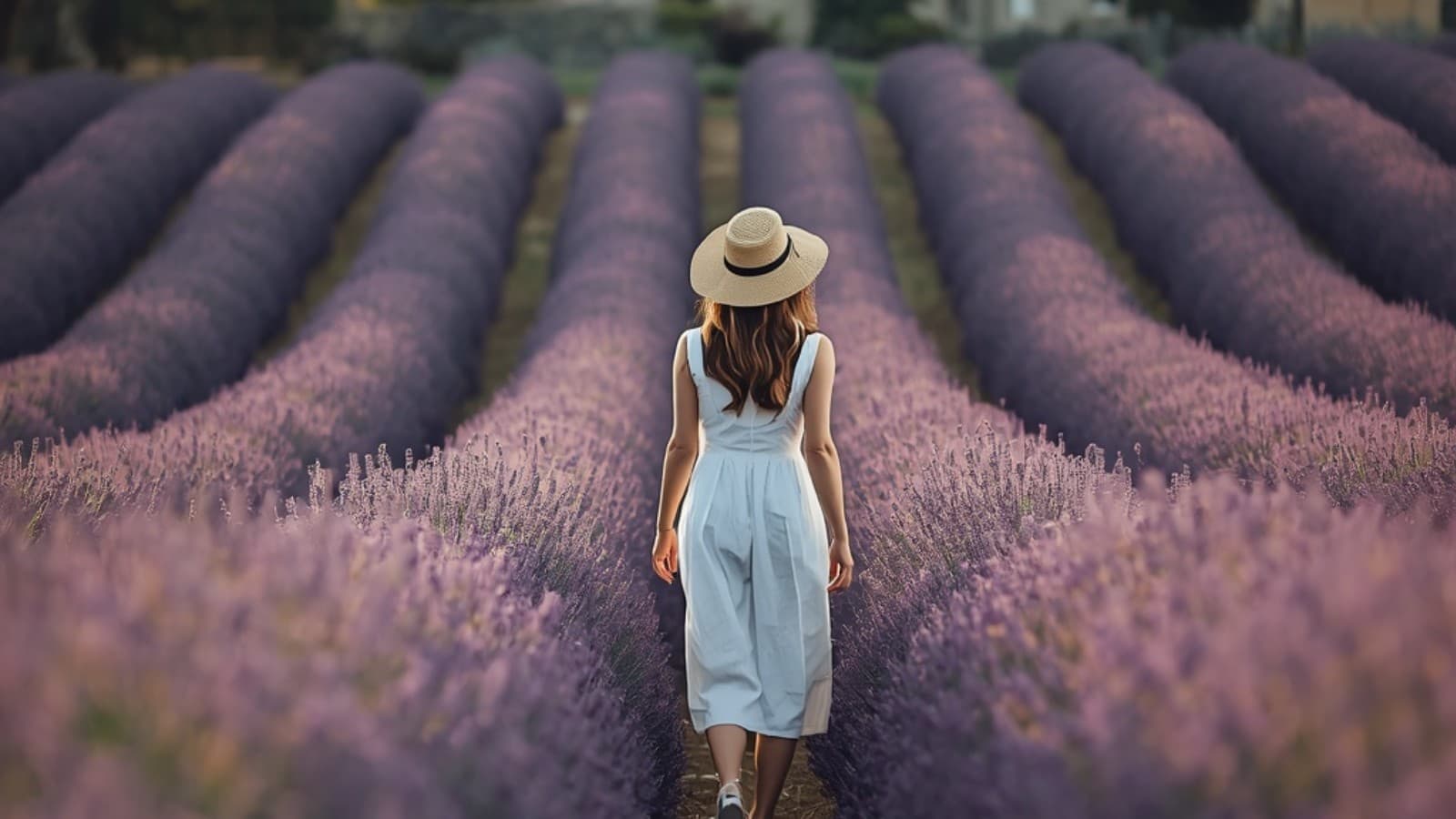
Experience the magic of Provence lavender season — endless purple rows, golden afternoon light, and the scent of summer in the south of France. Your complete guide to visiting the lavender fields of Provence.
Provence Lavender Season: Purple Fields, Perfect Light and Everything You Need to Know
There is a moment in the south of France, somewhere between late June and early August, when the landscape does something that no photograph fully prepares you for. The fields turn purple. Not just one field, not a garden patch — entire plateaus, valley floors, and hillside terraces shift into a deep violet that runs to the horizon in every direction. The air carries a clean, medicinal sweetness that you feel before you process it as a scent. And the light, as it always does in Provence, arrives at angles that make the ordinary look extraordinary.
Provence lavender season is one of the most visually dramatic natural events in all of Europe. It draws photographers, painters, slow travelers, and honeymooners from across the world for one reason: there is nothing else quite like it. This guide covers everything you need to know to experience it fully — the best timing, the best locations, how to photograph it, where to stay, and how to make the most of every purple-soaked day.
When Is Provence Lavender Season and When Should You Go
The lavender season in Provence is not a single fixed date — it is a window that shifts by a few weeks each year depending on the winter rainfall, spring temperatures, and the specific variety of lavender being grown. Understanding this variability is the first step to planning a visit that actually delivers the purple fields you came to see.
The Lavender Bloom Timeline
Wild lavender, known as lavande vraie or fine lavender, typically blooms from mid-June onward at higher altitudes in the Pre-Alps above the Luberon. The lavender you see in the famous flat field photographs — lavandin, a hardier cultivated hybrid grown on the plateaus — blooms slightly later, usually from late June through late July, reaching its visual peak in early to mid-July.
The most reliable peak window across all the major growing regions is the first three weeks of July. This is when the Valensole plateau, the Luberon hillsides, and the fields around Sault and Apt are all in full bloom simultaneously. It is also the busiest period for tourism, which requires some planning around timing and crowd management.
By early August, farmers begin harvesting and the fields lose their color rapidly. A field that was a perfect purple carpet on July 15 can be bare grey-green stubble by August 5. If your trip window falls in late July, scout fields before committing to a full morning at any one location.
The Sweet Spot: Late June Versus Early July
Late June offers a slightly less crowded experience with fields that are beginning to bloom strongly. The color is a little less saturated than peak July but the light quality in late June — with longer days and a slightly softer sun angle — can actually produce better photographs. Accommodation is also easier to book and less expensive.
Early July is peak season in every sense. The fields are at maximum color, the markets are full of lavender products, the festivals are running, and the atmosphere in the villages is at its most festive. It is also when you will share every famous viewpoint with several dozen other visitors. Go early in the morning, before 8am, and you will have the fields largely to yourself.
The Best Lavender Locations in Provence
Provence covers a significant stretch of the south of France, and the lavender is not evenly distributed. Knowing which plateau or valley to prioritize will determine how memorable your visit is.
The Valensole Plateau
The Valensole plateau is the most famous and most photographed lavender region in France, and it deserves the reputation. Situated between Manosque and Riez in the Alpes-de-Haute-Provence department, it is a broad flat plateau at around 600 meters elevation that supports some of the largest continuous lavender fields in Europe. The rows here are extraordinarily long — some fields run for several hundred meters without interruption — which creates the vanishing-point perspective that defines the classic Provence lavender image.
The village of Valensole itself is worth a stop for its market and its elevated position overlooking the plateau. For photography, the fields west and north of the village toward Puimoisson offer the cleanest and most unobstructed compositions. The poppy fields that bloom in late spring in this same area are replaced entirely by lavender rows by July, transforming the landscape completely.
The Plateau de Sault
At 1100 meters, the Sault plateau sits higher than Valensole and cultivates fine lavender rather than lavandin. The bloom here happens slightly earlier, from mid-June, making Sault an excellent destination for travelers who want to see lavender before the main July peak on the lower plateaus.
The landscape around Sault is more dramatic and mountainous than Valensole, with the Mont Ventoux visible to the west and the Pre-Alps rising to the north. The fields are set within a more complex terrain of oak forests, rocky hillsides, and narrow roads, which gives the Sault lavender a wilder and less cultivated feel than the broad plateau fields further south.
The village of Sault hosts a lavender festival in mid-August and has an excellent local distillery where visitors can watch essential oil extraction from freshly harvested lavender.
The Luberon and the Senanque Abbey
The Senanque Abbey, situated in a narrow valley just outside the village of Gordes, is arguably the single most iconic lavender image in the world — a twelfth century Cistercian monastery with a small lavender field in front of it, framed by limestone cliffs on both sides. The image has appeared on so many travel posters and magazine covers that it risks feeling like a cliche, but standing in front of it in person dissolves that concern immediately.
The lavender field at Senanque is small by plateau standards, which means the bloom comes and goes quickly and the composition is only at its best for a few weeks in July. Check the abbey's own communication before visiting, as the field is on monastery grounds and viewing access has occasionally been restricted during peak periods.
The broader Luberon region — the villages of Roussillon, Menerbes, Lacoste, and Bonnieux — offers lavender in smaller field patches and terraced hillside plots set within a more varied and historically rich landscape than the open plateaus.
How to Photograph the Provence Lavender Fields
The lavender fields of Provence are genuinely one of the more forgiving and compositionally rich landscapes for photography. The rows provide natural leading lines, the color contrast between purple lavender and blue sky is extraordinary, and the light quality at golden hour in the south of France is among the best in Europe.
The Best Light for Lavender Photography
The golden hours — the forty-five minutes after sunrise and the forty-five minutes before sunset — provide the warmest and most directional light for lavender photography. At these times, the low angle of the sun skims across the tops of the lavender rows, creating shadow and depth between each row and making the purple color appear richer and more saturated.
Midday light in July in Provence is harsh, bleaching and flattening. It renders the lavender a washed-out blue-grey rather than the deep violet of early morning or evening. If you can only be in the field once, make it sunrise. The light arrives quickly, lasts only a short window, and the fields are at their most quiet and undisturbed.
Overcast days produce a softer and more even rendering of the lavender color that is closer to what the eye actually perceives in person. On overcast mornings, you lose the dramatic directional shadow but gain a more saturated and consistent purple across the frame.
Composition Techniques for Lavender Fields
The classic composition in a Provence lavender field uses converging rows as a leading line toward a single vanishing point at the horizon — often a farmhouse, a lone tree, or a church tower in the distance. This works because it creates depth and invites the viewer into the frame rather than simply presenting a flat wall of color.
Vary your perspective by getting low to the ground. Shooting from a few inches above the soil level with a wide angle lens makes the lavender rows appear to rise dramatically above you while the sky or horizon appears in the background. This perspective emphasizes the height and density of the lavender plants in a way that an eye-level shot does not.
Include a human element where it adds scale and context. A figure in white or cream clothing standing between rows — not looking at the camera, but looking along the rows or toward the horizon — provides a sense of the landscape's scale that a pure landscape shot often lacks.
For close-up and detail work, focus on individual lavender stalks backlit by early morning light. The translucent purple-grey petals and fine grey-green stems create a delicate botanical texture that complements and contrasts the wide landscape shots beautifully.
The Scent, the Villages and the Slower Side of Lavender Season
Photographing the lavender is only one dimension of what makes this season in Provence so memorable. The villages, the markets, the food, and the particular quality of summer life in the south of France are equally part of the experience.
The Lavender Markets and Festivals
Every village in the lavender-growing regions of Provence holds a weekly market throughout summer, and during July these markets are heavy with lavender products — sachets, essential oils, honey, soap, herbal teas, and the small bundles of dried lavender that seem to appear in every Provencal kitchen and farmhouse.
The most significant dedicated lavender events include the Fete de la Lavande in Digne-les-Bains in early August, which is the oldest lavender festival in Provence and includes a parade of floats decorated entirely with fresh lavender. The Corso de la Lavande in Valensole and the festival at Sault are smaller but more intimate and often easier for visitors to access without significant crowds.
The village of Apt hosts a large Saturday market year round, but in July it expands significantly and draws producers from across the Luberon and the Vaucluse with a particularly good selection of local lavender products alongside the usual produce, cheese, and olives.
The Villages Above the Fields
The hilltop villages of Provence — Les Baux-de-Provence, Gordes, Roussillon, Menerbes, and Oppede-le-Vieux among them — are at their most alive in July. The light in early evening turns the limestone facades and ochre-painted walls warm amber, the cafe terraces fill, and the views from the village walls across the lavender-covered countryside below are extraordinary.
Roussillon is particularly worth a stop for its entirely unique landscape — the village sits on a cliff of ochre sandstone in shades from pale yellow to deep brick red, which creates a striking color contrast with the purple fields visible in the valley below during lavender season.
Eating and Drinking During Lavender Season
Provencal summer cooking is one of the great regional cuisines of France. In July, the markets and restaurant menus are built around what is at its absolute peak: tomatoes in every variety and preparation, melons from Cavaillon that are arguably the finest in the world, tapenade, fresh chevre, aioli, and lamb from the high plateaus.
Lavender itself appears in the cooking more than you might expect — lavender-infused honey is a regional staple, lavender salt is used as a seasoning for grilled meats, and a few skilled pastry chefs incorporate lavender into their baked goods in ways that stop short of soap and land squarely in the category of genuinely delicious.
Rose wine from the Luberon and the Cotes de Provence is the default drink of a Provencal summer. Drink it cold, drink it at lunch, and do not apologize for either.
Where to Stay for the Best Lavender Experience
Choosing the right base for a Provence lavender trip makes a significant difference to the quality of the experience. The key consideration is proximity to the fields and the ability to reach them easily at sunrise without a long drive on unfamiliar roads in the dark.
Staying on the Valensole Plateau
The village of Valensole itself has a small number of chambres d'hotes — family-run bed and breakfast accommodations — that place you within a five to ten minute drive of the main fields. Staying in Valensole rather than in the larger nearby towns of Manosque or Digne-les-Bains means you can leave for the fields before sunrise without committing to a forty-five minute predawn drive.
Several agriturismi on the plateau itself offer accommodation surrounded by lavender, which makes waking before sunrise and walking directly into the fields a practical option rather than an aspiration.
The Luberon Villages
For travelers who want to combine lavender with the broader experience of Provencal village life, basing in the Luberon region — specifically in or near Gordes, Bonnieux, or Lourmarin — offers the best balance. You are within thirty to forty-five minutes of both the Valensole plateau and the Sault area, and you are positioned among some of the most beautiful villages in France for afternoon and evening exploration.
Gordes is the most visually dramatic of the Luberon villages but also the most expensive and the most visited. Bonnieux and Lourmarin offer similar character with a slightly lower profile and marginally better value in accommodation and restaurants.
Booking Considerations for July
July is high season across Provence and accommodation at all levels books out many months in advance. For a stay in the first two weeks of July during peak lavender season, begin your accommodation search in January or February at the latest. Flexible travelers who can shift their dates by a week in either direction will find availability and pricing significantly more favorable in late June or late July.
Practical Tips for Visiting the Provence Lavender Fields
Reaching the lavender fields at the right time requires some logistical planning that is worth thinking through before arrival.
Getting There and Getting Around
Provence is best explored by car. The lavender fields are dispersed across a large rural area with limited and infrequent public transportation between the major agricultural zones. Renting a car from Marseille, Avignon, or Aix-en-Provence and driving to your base gives you the flexibility to reach fields at dawn, shift between locations as the bloom moves, and explore the village markets and back roads at your own pace.
The drive from Avignon to Valensole takes approximately one hour and forty-five minutes via the A51 autoroute. From Marseille, it is a similar time via a slightly different route. The roads across the plateau itself are narrow in places but well-maintained and easy to navigate with a standard GPS or maps application.
Respecting the Fields
The lavender fields are working agricultural land. The plants are a crop with significant commercial value — Provence produces the majority of France's lavender essential oil output — and damage to the rows from people walking through them affects the harvest.
Stay on the edges of fields or on the tracks between rows. Do not walk into the middle of a planted field for a photograph. Do not pick lavender from a field without explicit permission from the farmer. Many fields have clear signage about access and photography, and respecting these signs is both ethically correct and practically important for maintaining the relationship between local farmers and visitors.
Why the Provence Lavender Season Stays With You
Most travel experiences fade reasonably quickly into a general impression of a place. The Provence lavender season tends not to. People who have stood in those fields at sunrise, with the cool morning air carrying the scent of lavender across the plateau and the light turning everything amber and violet simultaneously, tend to describe it as one of the most purely beautiful things they have seen.
It is not an intellectual beauty. It does not require context or knowledge of history or architecture to land fully. It is a color, a scent, a quality of light, and an expanse of landscape that speak directly and immediately. That is a rare quality in a travel experience, and it is why Provence lavender season is not merely a travel trend or an aesthetic moment — it is a place, and a time, and an experience, that genuinely deserves all of the attention it receives.
Plan early, set your alarm for before sunrise, and drive out to the plateau when the sky is still dark. What waits for you when the light arrives is worth every bit of the effort.
Quick Reference: Provence Lavender Season at a Glance
Best time to visit: First three weeks of July for peak bloom across all regions. Late June for fewer crowds and strong early bloom. Avoid late August as harvest removes most fields.
Best locations: Valensole plateau for classic wide-field photography. Plateau de Sault for earlier bloom and dramatic mountain landscape. Senanque Abbey for the iconic monastery composition. Luberon villages for a combination of lavender and Provencal culture.
Best photography conditions: Arrive at fields thirty minutes before sunrise. Shoot during the first forty-five minutes of golden hour. Return in the final hour before sunset for warm evening light. Avoid midday entirely.
Getting there: Fly into Marseille Provence or Avignon Caumont airports. Rent a car on arrival. Base yourself in Valensole village, Gordes, or Bonnieux depending on your priorities.
Where to stay: Book accommodation by January or February for a July visit. Look for chambres d'hotes and agriturismi on or near the plateau for the most immediate field access. Luberon villages offer the best balance of lavender access and broader Provencal experience.
More in this Category
Prague After Midnight: Cobblestone Streets, Lantern Glow and Gothic Magic
Tuscan Farmhouse Morning Views: Golden Wheat Fields, Soft Fog & Rustic Beauty